Embracing the Warmth of Earth: A Guide to Abstract Brown Watercolor Backgrounds
In an era dominated by crisp, digital perfection and sterile minimalist designs, there is a growing craving for authenticity. We find ourselves seeking textures that feel human, organic, and tactile. This desire has brought the timeless art of watercolor back into the spotlight, specifically within the realm of digital assets. Among the most versatile and emotionally resonant palettes available are abstract brown watercolor backgrounds. These are not merely images; they are portals to nature's warmth, offering a depth of character that flat colors simply cannot replicate.
This article explores the significance of earthy tones in modern design, the unique value of high-resolution watercolor textures, and how a curated collection of 24 abstract JPEG files can transform your creative workflow. Whether you are a seasoned graphic designer, a scrapbooking enthusiast, or a business owner looking to elevate your brand identity, understanding the power of these warm hues is essential.
The Psychology of Earthy Tones in Design
Before diving into the technical specifications of digital textures, it is crucial to understand why brown watercolors hold such sway over our visual perception. Color psychology plays a pivotal role in how audiences interact with content. While blue often signifies trust and red evokes urgency, brown speaks to stability, reliability, and comfort.
Brown is the color of the earth itself. It represents grounding, resilience, and a connection to nature. When used in design, it creates an immediate sense of calm and approachability. Unlike stark black or white, which can feel cold or clinical, brown watercolor textures introduce a softness that invites the viewer in. They evoke memories of autumn leaves, rich soil, coffee, and old leather-bound books. In a digital landscape that often feels overwhelming, these warm hues act as a visual anchor, providing a soothing backdrop that allows other elements to shine without competing for attention.
Why High-Resolution Watercolor Textures Matter
The transition from traditional art supplies to digital assets has revolutionized creativity, but it comes with specific requirements. One of the most critical factors in this shift is resolution. A common misconception among beginners is that any image downloaded from the internet will suffice for professional projects. However, when working with textures intended for print or large-scale digital displays, pixelation is the enemy of quality.
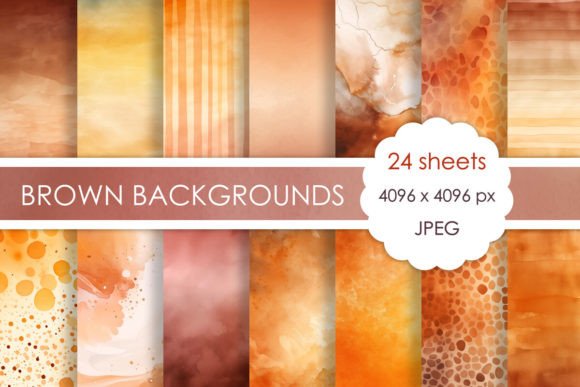
This is where the importance of high-resolution quality becomes apparent. Consider a collection like the one featuring 24 abstract brown watercolor backgrounds, each rendered at a stunning 4096 x 4096 pixels. Why does this matter?
- Crisp Detail: At this resolution, the subtle gradients of the watercolor pigment remain visible even when scaled up. You can see the way the paint bleeds into the paper, capturing the "organic essence" of the medium.
- Versatility: High-resolution files allow for flexibility. You can use a single texture as a full-page background for a website, crop a section for a social media post, or use it as a pattern for fabric printing without losing clarity.
- Print Readiness: For physical products like greeting cards, packaging, or book covers, standard web images often appear blurry. 4K resolution ensures that your prints are vibrant and sharp, meeting professional standards.
Without this level of detail, the magic of the watercolor effect is lost, leaving behind a flat, artificial-looking block of color that fails to convey the intended mood.
Exploring the Diversity of Abstract Patterns
One of the greatest strengths of a well-curated collection is its variety. If you were to create a portfolio using only solid brown backgrounds, your work might appear monotonous. The true artistry lies in the diversity of textures found within abstract collections. A comprehensive set typically includes a wide array of patterns that mimic different natural phenomena and artistic techniques.
Imagine the possibilities offered by combining different styles:
- Subtle Stripes: These offer structure and rhythm. They are perfect for layouts that need a bit of direction without being too rigid. Think of them as the backbone of a design, providing order amidst chaos.
- Dotted Patterns (Polka Dots): Dots add playfulness and whimsy. In a brown palette, they soften the look, making it feel more vintage or handcrafted rather than industrial.
- Marbled Swirls: Marble effects bring a sense of luxury and fluidity. The swirling motion of the pigments mimics the movement of liquid, adding dynamic energy to static designs.
- Lively Splashes: Perhaps the most expressive category, splashes capture the spontaneity of the artist's hand. They are ideal for drawing the eye to a specific area or adding a burst of personality to a minimalist layout.
By having access to all these variations, designers can tell a unique story with every project. Each background tells a different tale, ready to infuse your work with warmth and a natural aesthetic that feels both intentional and effortless.
Practical Applications in Modern Creativity
The utility of abstract brown watercolor backgrounds extends far beyond simple decoration. They are functional tools that fit seamlessly into various industries and workflows. Let's explore how these textures are applied in real-world scenarios.
Digital Scrapbooking and Printables
For hobbyists and crafters, digital paper is a game-changer. Traditionally, creating a scrapbook required purchasing physical papers, which could be expensive and limited in variety. With instant accessibility to high-quality JPEG files, users can layer text, photos, and embellishments on top of these rich textures. The result is a cohesive, professional-looking album that captures memories with an artistic flair.
Graphic Design and Branding
Brands that wish to communicate values like sustainability, heritage, or artisanal quality often turn to earthy tones. A coffee shop, an organic skincare line, or a boutique bakery might use these watercolor backgrounds for their packaging, social media headers, or website hero sections. The textures provide a premium feel that elevates the perceived value of the product.
3D Modeling and Interior Visualization
In the world of technology and architecture, textures are vital for realism. 3D artists use these images as diffuse maps or displacement maps to give virtual walls, floors, or objects a tangible surface. A marble swirl texture can make a virtual countertop look incredibly realistic, while a subtle stripe pattern can simulate wallpaper in a room rendering.
Educational Materials and Presentations
Teachers and presenters often struggle with slides that look too corporate or boring. Using these warm, organic backgrounds can make educational materials more engaging for students. The non-distracting nature of brown tones ensures that the focus remains on the content, while the artistic touch keeps the audience interested.
Streamlining Your Workflow with Ready-to-Use Assets
In the fast-paced world of creative work, time is a valuable commodity. One of the standout features of pre-made collections is their readiness for use. Many aspiring artists spend hours trying to recreate watercolor effects digitally, often ending up with results that look stiff or unnatural. By utilizing a curated set of 24 professionally created backgrounds, you bypass the learning curve entirely.
You can download your files immediately and begin transforming your ideas into reality. There is no need for additional editing, complex masking, or time-consuming painting. Simply drag and drop the JPEG file into your software, adjust the opacity if necessary, and let the texture do the heavy lifting. This efficiency allows you to focus on the core concept of your project rather than getting bogged down in technical execution.
Conclusion: The Enduring Appeal of Organic Beauty
The trend toward natural aesthetics is not a fleeting fad; it is a reflection of our collective desire to reconnect with the organic world. Abstract brown watercolor backgrounds serve as a bridge between the digital and the physical, bringing the comforting embrace of nature into our screens and printouts. From the versatility of marbled swirls to the simplicity of dotted patterns, these textures offer endless possibilities for expression.
Whether you are designing a logo, building a website, or creating a personal journal, incorporating these warm hues can make a significant difference. They remind us that imperfection is beautiful, that texture adds depth, and that sometimes, the most powerful designs are those that feel the most human. By leveraging high-quality, diverse resources, creatives of all levels can produce work that is not only visually stunning but also deeply resonant.