Crochet Market Bag Pattern PDF Video: A Practical Review for Beginners
In the current landscape of digital craft resources, finding a pattern that balances clarity, durability, and ease of use can be challenging. The Crochet Market Bag Pattern PDF Video addresses a specific gap in the market: providing a robust, functional bag design that remains accessible to those just starting their journey with yarn. This resource is not merely a set of instructions; it is a comprehensive package designed to guide users from selecting materials to completing a finished product that serves a practical purpose.
The primary appeal of this pattern lies in its targeted approach to the beginner crocheter who desires a professional-looking result without getting lost in complex jargon or ambiguous diagrams. By combining a written guide with visual aids, the Crochet Market Bag Pattern PDF Video offers a multi-modal learning experience that caters to different learning styles. Whether you prefer reading step-by-step text or watching a demonstration, the inclusion of both formats significantly reduces the friction often associated with learning new techniques.
Design Specifications and Material Requirements
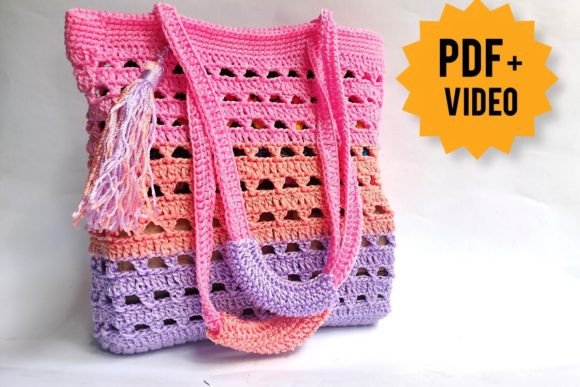
Before diving into the construction process, understanding the physical attributes of the final product is essential for planning your project. The finished dimensions are meticulously defined to ensure the bag is suitable for everyday carry. The bag measures 8.27 inches (21 cm) in width, 9.45 inches (24 cm) in height, and 2.36 inches (6 cm) in depth. These proportions create a compact yet spacious silhouette, ideal for carrying small essentials like keys, a phone, a wallet, or perhaps a few groceries during a quick errand run.
A critical factor in achieving these exact dimensions is the choice of material. The pattern specifically calls for Red Heart Nylon Crochet Yarn, which falls under the light worsted weight category. This choice is strategic; nylon yarn provides a distinct advantage over traditional cotton or acrylic blends by offering superior durability and water resistance. For a market bag, where items might get wet or the bag could be subjected to rough handling, the strength of nylon ensures longevity. The pattern notes that each color requires approximately 218 yards (200 meters), with a total yardage of 654 yards (600 meters) needed for the full project.
It is important to note that finished sizes may vary depending on individual tension levels. While the pattern aims for consistency, the nature of handcrafting means that slight deviations are expected. However, the use of a structured nylon fiber helps mitigate significant size distortions, making the final product more reliable than those made with looser, softer fibers.
Comprehensive Content and Usability
The value of the Crochet Market Bag Pattern PDF Video extends beyond the basic instructions. The downloadable PDF is a substantial 11-page document, a length that suggests a thorough treatment of the subject matter rather than a superficial overview. The content includes a cover page, detailed written instructions, and clear drawing patterns. This structure allows the user to navigate the project logically, moving from preparation to execution.
For those who find text-heavy patterns difficult to follow, the inclusion of YouTube video tutorials is a significant asset. Visual learners often struggle with static images, but seeing the hook movement, stitch formation, and tension control in real-time can clarify steps that might otherwise be confusing. The combination of written and video resources creates a safety net; if a reader gets stuck on a specific row, they can switch to the video tutorial for clarification. This flexibility is a hallmark of high-quality instructional design.
The pattern is written in US crochet terminology, which is standard for many English-speaking regions but worth noting for international buyers accustomed to UK terms. Consistency in terminology is vital for avoiding costly mistakes, and the clear labeling ensures that even novice crocheters can follow along without needing to constantly convert stitch counts.
Essential Tools and Preparation
To successfully execute this project, specific tools are required. The pattern recommends a 2.5mm or 3mm crochet hook. This relatively small hook size paired with light worsted weight yarn results in a tight gauge, which is crucial for the structural integrity of a nylon bag. Using a larger hook might result in a loose fabric that fails to hold its shape or support weight effectively.
- Crochet Hook: 2.5mm or 3mm (essential for correct gauge).
- Tapestry Needle: Required for weaving in ends and sewing components together.
- Matches: Necessary for finishing the nylon yarn, as synthetic fibers melt slightly when cut to prevent fraying.
- Meter: For measuring yarn usage and ensuring accurate dimensions.
- Stitch Marker: Helps track the beginning of rounds and count stitches accurately.
- Scissors: For cutting yarn cleanly.
The requirement for matches is a specific detail that highlights the unique nature of working with nylon. Unlike natural fibers, nylon does not fray in the same way; instead, a quick flame seals the cut end. This small but important instruction prevents unraveling and demonstrates the attention to detail found in the Crochet Market Bag Pattern PDF Video.
Practical Application and Real-World Performance
When evaluating the Crochet Market Bag Pattern PDF Video for real-world utility, the focus shifts to how the finished bag performs in daily scenarios. The use of nylon makes this bag particularly well-suited for damp environments. Unlike cotton bags that can absorb moisture and become heavy or develop odors, a nylon market bag dries quickly and resists mildew. This makes it an excellent choice for beach trips, farmers' markets, or rainy days.
The size of the bag, while compact, is versatile enough for various uses. It can serve as a stylish accessory for casual outings or a functional tote for small shopping trips. The depth of 2.36 inches allows for items to sit securely without sagging, provided the tension is maintained correctly. For professionals or entrepreneurs looking to create handmade goods for sale, this pattern offers a strong foundation. The clean lines and durable material make it a sellable item that appeals to customers seeking eco-friendly alternatives to plastic bags.
However, potential users should be aware of the limitations. The nylon yarn has a smooth texture that can sometimes slip off the hook, requiring a bit more practice to maintain consistent tension compared to textured cottons. Additionally, the heat-sealing method for finishing edges requires caution to avoid burning fingers or melting the yarn too aggressively. These are minor hurdles that experienced hobbyists will manage easily, but beginners should proceed with care.
Who Benefits Most from This Resource?
This pattern is ideally suited for adults aged 20–50 who are either serious hobbyists or individuals exploring creative side hustles. Freelancers, bloggers, and small business owners will appreciate the professional presentation of the PDF and the potential to create inventory quickly due to the straightforward nature of the design. The availability of video tutorials lowers the barrier to entry, making it accessible to those who have never held a crochet hook before.
Educators and mentors might also find this resource valuable as a teaching tool. The clear breakdown of steps and the visual component make it easy to demonstrate techniques in a classroom setting or online workshop. Furthermore, the English-only format ensures that the instructions are precise, though it limits accessibility for non-English speakers.
Final Assessment
The Crochet Market Bag Pattern PDF Video stands out as a well-constructed resource that delivers on its promise of simplicity and functionality. By addressing the common pain points of beginner crocheters—such as unclear instructions and lack of visual support—it provides a smooth path to creating a durable, useful item. The emphasis on nylon yarn adds a layer of practicality that elevates the project from a simple craft exercise to a viable product for daily use.
While no pattern is without its challenges, the inclusion of comprehensive materials lists, video guides, and detailed diagrams mitigates most risks. For anyone looking to learn a new skill or produce a high-quality handmade bag, this pattern represents a solid investment of time and effort. It balances the technical requirements of the craft with the practical needs of the user, resulting in a final product that is both aesthetically pleasing and functionally sound.