Classic Damask Style Pattern Texture: A Timeless Element for Modern Design
The visual landscape of design is often defined by the tension between the ephemeral and the eternal. While modern trends shift with the speed of digital algorithms, certain aesthetic anchors remain constant, providing a sense of stability and sophistication. Among these enduring elements, the Classic Damask Style Pattern Texture stands out as a pinnacle of ornamental design. It is not merely a background; it is a narrative woven into pixels, representing centuries of textile history, architectural grandeur, and artistic refinement.
This specific digital asset collection offers more than just a decorative image; it provides a versatile foundation for creators across various disciplines. By leveraging high-resolution files that capture the essence of Victorian motifs and antique prints, designers can bridge the gap between historical elegance and contemporary application. The following analysis explores the characteristics, practical applications, and strategic advantages of integrating this specific texture into professional and personal projects.
The Anatomy of Ornate Damask Textile Patterns
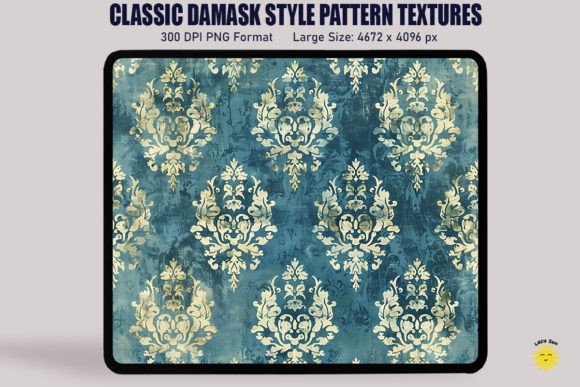
To understand the value of the Classic Damask Style Pattern Texture Antique Damask Prints Backdrop, one must first appreciate the structural complexity of damask itself. Historically, damask refers to a reversible figured fabric of silk, wool, linen, cotton, or synthetic fibers, with a pattern formed by weaving. The characteristic feature is that the pattern is visible on both sides of the fabric, though the sheen differs depending on the direction of the light.
In the realm of digital graphic design, we translate this physical weave into visual language. The provided design utilizes a resolution of approximately 4672 x 4096 pixels at 300 DPI. This high definition is crucial because it preserves the intricate details of the Victorian Damask Motif Background. Unlike lower-quality raster images that pixelate when enlarged, this file allows for significant scaling without losing quality. The ornate nature of the pattern implies a dense interplay of light and shadow, mimicking the way light catches the raised areas of a physical textile.
The aesthetic is defined by symmetry and repetition, hallmarks of classical design theory. These patterns often feature floral medallions, scrolling vines, and geometric borders that frame the composition. When applied correctly, they add depth and texture to flat surfaces, creating an illusion of tactile richness even on a two-dimensional screen or printed paper.
Versatility in Creative Applications
The utility of this digital resource extends far beyond simple decoration. Because the files are delivered as PNGs within a ZIP archive, they offer immediate usability for a wide array of workflows. The non-layered nature of the files simplifies the process for users who do not require individual element manipulation, allowing for rapid deployment in time-sensitive projects.
- Event Stationery and Invitations: One of the most traditional uses for damask patterns is in wedding and formal event planning. The Classic Damask Style Pattern Texture provides an instant backdrop that conveys luxury and formality. Whether used for the main body of a wedding invitation, a save-the-date card, or a reception menu, the antique print style adds a layer of gravitas that modern sans-serif fonts alone cannot achieve.
- Digital Marketing and Social Media: In an era where attention spans are short, visuals that evoke nostalgia and trust perform exceptionally well. Social media banners featuring this Victorian motif can differentiate a brand from competitors using generic stock photography. The texture acts as a subtle filter, giving digital content a "curated" look that suggests established heritage.
- Web Design and User Interfaces: Web backgrounds often suffer from being either too plain or too distracting. A low-opacity overlay of the Ornate Damask Textile Patterns can provide a sophisticated canvas for text content without compromising readability. It is particularly effective for websites in the fashion, interior design, and hospitality sectors.
- Scrapbooking and Craft Projects: For hobbyists and educators, the ability to print high-resolution textures opens doors for mixed-media art. Scrapbookers can use the 4672 x 4096 pixel dimensions to create full-page layouts or detailed journaling cards. The pattern serves as a unifying theme, tying together disparate photos and memorabilia under a cohesive aesthetic umbrella.
Technical Considerations for Professional Implementation
While the creative possibilities are vast, successful implementation requires an understanding of the technical specifications provided with the product. The inclusion of a High resolution 300 DPI specification is a critical detail for professionals. This standard is the industry benchmark for commercial printing. If a designer intends to produce large-format items such as banners, posters, or exhibition backdrops, starting with a 300 DPI source ensures that the final output remains crisp and free of jagged edges.
However, users must be aware of the file format constraints. The package contains PNG files contained within a .ZIP archive. It is important to note that the files are NOT SVG files and are not layered for cutting. This distinction is vital for crafters utilizing machines like Cricut or Silhouette. Users expecting to isolate individual flowers or scrollwork for vinyl cutting will need to utilize image editing software to trace or mask the elements manually before sending them to a cutter. Understanding this limitation upfront prevents workflow bottlenecks.
The requirement to unzip files on a PC or Mac is a standard procedural step. Once extracted, the PNG files are ready for import into major design suites such as Adobe Photoshop, Illustrator, Canva, or Affinity Designer. Because the design is large, it can be resized to fit as needed without losing quality, offering flexibility for both mobile screens and billboard-sized prints.
Color Dynamics and Print Realities
A common challenge in digital-to-physical translation is color fidelity. The product notes state that colors may vary depending on devices and printers. This is an inherent property of the RGB (screen) to CMYK (print) color space conversion. On a monitor, the antique damask might appear with vibrant highlights and deep shadows. However, when printed on home inkjet printers or commercial offset presses, the colors may shift slightly towards muted tones or different hues.
For professional results, designers should calibrate their monitors and request proof prints before mass production. The beauty of the Antique Damask Prints Backdrop lies in its subtlety; slight variations in color often enhance the vintage feel rather than detract from it. In many cases, a slightly desaturated look is preferred to mimic the aging of real textiles over time.
Strategic Advantages for Business Owners and Educators
For business owners, incorporating high-quality design assets is a cost-effective strategy to elevate brand perception. Investing in a single digital pack that includes multiple applications—from web headers to printed flyers—reduces the need for hiring external illustrators for every project. The Classic Damask Style Pattern Texture serves as a reusable asset that maintains consistency across all touchpoints.
Educators and researchers also find value in these resources. History teachers can use the Victorian motifs to illustrate the Industrial Revolution's impact on textile manufacturing. Art students can study the symmetry and composition of the damask pattern as a case study in classical design principles. The availability of a large, high-resolution file allows for detailed examination of the pattern's geometry, facilitating deeper learning experiences.
Maximizing the Potential of Digital Assets
The transition from physical craftsmanship to digital reproduction has democratized access to high-end aesthetics. What was once exclusive to expensive tapestries or bespoke wallpaper is now accessible via a digital download. The Classic Damask Style Pattern Texture exemplifies this shift. It allows a small business owner to compete visually with established brands by leveraging timeless design language.
When approaching a project with this texture, consider the balance between the pattern and the foreground content. Because the design is ornate, it demands respect. Overcrowding the layout with too much text or competing graphics can obscure the beauty of the damask. Instead, treat the pattern as a stage upon which your message performs. Use negative space effectively, allowing the Victorian Damask Motif Background to breathe.
Furthermore, the versatility of the format encourages experimentation. Designers can apply blending modes, adjust opacity, or combine the texture with other elements to create entirely new compositions. The fact that the files are not layered does not limit creativity; rather, it forces a focus on the overall composition and the interplay of the entire image.
Conclusion on Enduring Design Value
In a digital world saturated with fleeting trends, the Classic Damask Style Pattern Texture offers a return to permanence. Its association with history, luxury, and craftsmanship provides an emotional resonance that generic designs lack. Whether used for a wedding invitation that will be kept for decades or a website banner that establishes authority, this asset delivers on its promise of elegance.
By understanding the technical parameters—such as the 300 DPI resolution, the PNG format, and the limitations regarding cutting layers—users can integrate this resource seamlessly into their workflows. The ability to resize the 4672 x 4096 pixel design without quality loss ensures that the investment yields returns across diverse mediums. From scrapbooking enthusiasts to corporate branding experts, the potential for application is limited only by imagination. As long as there is a desire for beauty and tradition in design, the ornate allure of damask will remain a relevant and powerful tool.